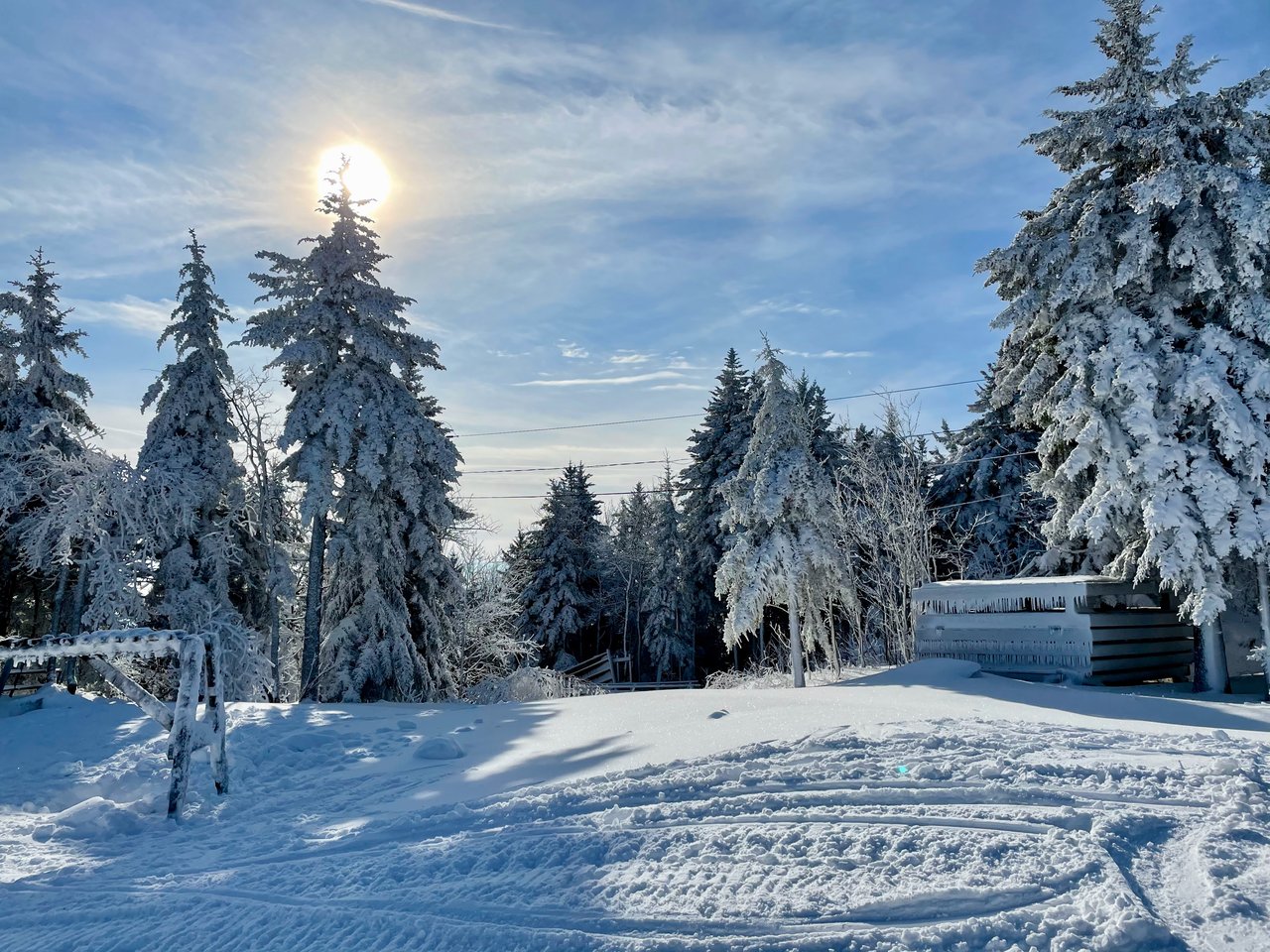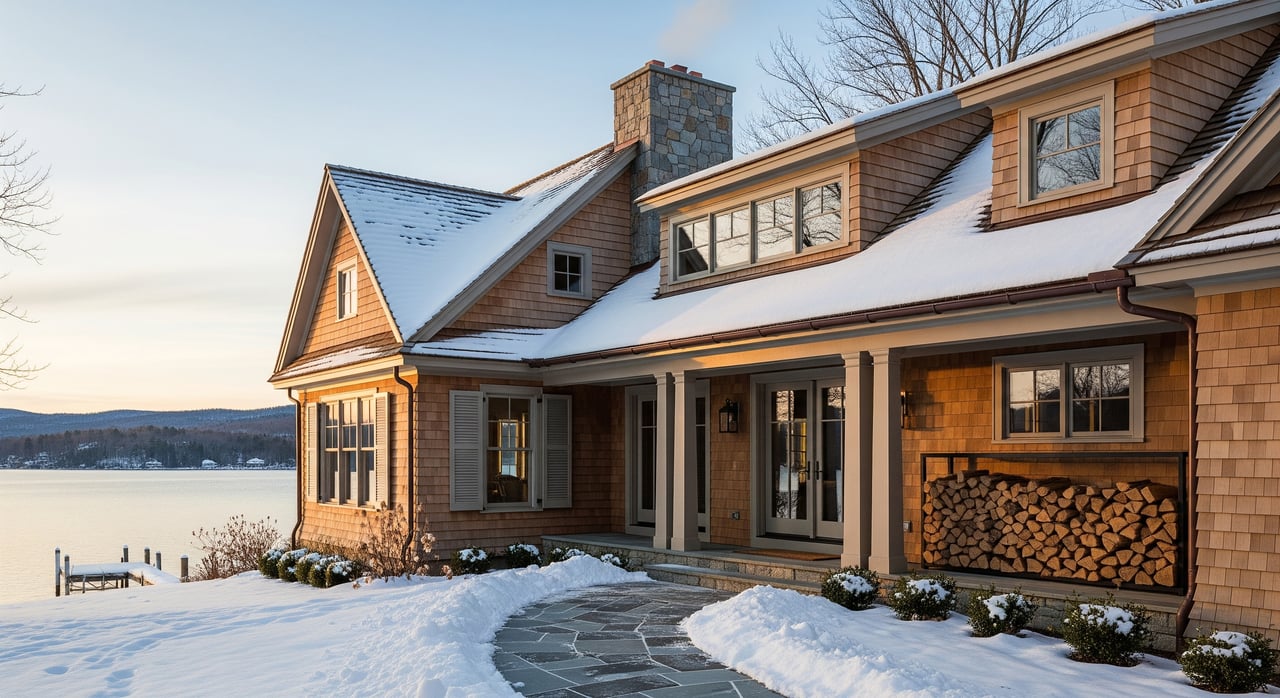
Winter on Lake Winnipesaukee is beautiful, but it can be brutal on a vacant waterfront home. If you split time between Alton and somewhere warmer, you know the risks: hard freezes, ice, heavy snow, and the occasional power outage. Your goal is to protect your investment without wasting energy or losing sleep. This guide gives you a clear, Alton‑specific plan so you can choose the right strategy, set up smart monitoring, and document everything for peace of mind and insurance confidence. Let’s dive in.
Know Alton’s winter risks
Central New Hampshire experiences prolonged sub‑freezing periods along with heavy snow and ice. Waterfront homes in Alton also see lake-driven wind and freezing spray that can accelerate heat loss and strain exposed systems. The major threats include frozen pipes, ice dams, snow loads, ice movement at docks, and outages that can shut down heat or sump pumps. A plan that layers protection and monitoring is the best way to lower risk and control costs.
Choose your winter strategy
Every property is different. Your decision comes down to how often you visit, your insurance requirements, the complexity of your systems, and your tolerance for risk and operating costs. Most absentee owners land on one of three approaches: drain‑down, maintain‑heat with heat trace, or a hybrid.
Drain‑down: when full shutdown fits
If the home will sit vacant all winter and your plumbing is straightforward, a full drain‑down can be effective.
- What it is: You shut off incoming water, open and blow out lines, and winterize equipment that holds water. Irrigation and pool lines are blown out with compressed air. Closed hydronic systems that allow it may use non‑toxic propylene glycol. Do not add antifreeze to potable lines.
- Pros: Eliminates freeze risk in drained lines and can lower heating costs since you can keep temperatures lower inside.
- Cons: Complex systems like radiant floors, recirculation loops, humidifiers, and fire suppression can be expensive or risky to drain. Some insurers require maintained heat for vacancy coverage. Spring recommissioning takes time and qualified pros.
- Scope and steps: Drain domestic lines and exterior fixtures, follow manufacturer guidance for water heaters, isolate and winterize well equipment and pressure tanks, and protect traps and drains as needed. Hire licensed contractors who know lakeshore systems.
Maintain heat with heat trace: ready for visits
If you plan occasional winter use or you have sensitive interiors or complex hydronics, maintaining heat with targeted heat tracing often makes sense.
- What it is: Keep the home at a safe set point while protecting vulnerable pipes with insulation and self‑regulating heat trace. Pair it with remote monitoring, automatic water shutoff, and leak detection.
- Pros: Keeps radiant heat, hot water, and humidification online. The home is guest‑ready fast and avoids full seasonal recommissioning.
- Cons: Higher winter energy costs and higher exposure during power outages unless you have a properly sized generator. Heat trace must be installed to code and inspected.
- Scope and steps: Program heating to a vacancy mode, insulate exposed runs, install heat tape on exterior or unconditioned pipes, and add smart sensors that alert you to temperature drops or leaks.
Hybrid: the common Alton solution
Many luxury lake owners combine both approaches. Heat the primary living shell and keep critical hydronic systems active, while draining seasonal and exterior lines. Add heat trace where freeze risk is highest.
- Example: Maintain the home at about 50–60°F depending on your envelope and contents, drain irrigation and hose bibs, remove or winterize dock systems, and heat‑trace pipes in crawlspaces and boathouses. This reduces heating runtime while keeping the home usable for impromptu winter visits.
Smart monitoring essentials
Smart tech gives you early warning and remote control, which is crucial when you are not in town.
- Smart thermostats and sensors: Look for remote setpoint control, multiple room sensors, low-temperature alerts, geofencing, and solid integration with your property platform. Verify internet stability and consider cellular failover if shore-side broadband is spotty.
- Leak detection and automatic shutoff: Place sensors at water heaters, under sinks, near washers, and by sump pumps. A whole‑house automatic shutoff can stop a flood if a pipe bursts or abnormal flow is detected.
- Security cameras: Weather‑rated cameras help you verify vent plumes, ice dam conditions, and entry points. Hardwire where possible, use protected power, and consider PoE or devices with cellular backup.
- Sump pumps and power: Test the sump and install a battery backup. If you maintain heat, a generator sized for the boiler or furnace, circulators, pumps, and monitoring gear adds resilience. Use licensed electricians and a proper transfer switch.
Lakefront systems to winterize
Waterfront homes bring unique components that need attention beyond the main house.
- Docks and lifts: Remove seasonal docks where possible, or set them in a secure winter configuration to avoid ice damage. Disconnect and winterize boat lifts, shore power, and pump lines.
- Shoreline utilities: Drain and isolate any lakeside water lines or pumps. Insulate exposed runs and use heat trace where permitted and appropriate.
- Boathouses and outbuildings: Treat these like separate zones. If they are unheated, drain and isolate their plumbing. If you maintain heat, add sensors and heat trace to exposed pipes.
- Wells and septic: Many Alton homes use on‑site systems. Follow state guidance and licensed contractor advice for insulating wellheads, protecting pressure tanks, and keeping septic components from freezing.
Your step‑by‑step timeline
Use this seasonal schedule, then tailor it to your systems and travel calendar.
Early fall: plan and prep
- Book professional service: Schedule HVAC, chimney, water heater, and sump pump inspections. Decide your winter strategy and notify your insurer and property manager.
- Exterior systems: Blow out irrigation and pool lines. Drain and store hoses. Shut off and drain exterior faucets.
- Dock and shoreline: Arrange dock removal or winter configuration. Disconnect lifts and shore equipment.
- Insulation and heat trace: Insulate exposed pipes and add heat tape to known problem runs. Seal envelope gaps that let cold air in.
- Smart devices: Install or test thermostats, temperature sensors, leak detectors, whole‑house shutoff, cameras, and remote power monitoring.
Pre‑freeze: execute and test
- Drain‑down tasks: Complete drain‑down on designated systems and document with photos and invoices.
- Thermostat programming: Set vacancy schedules and verify remote access and alerts.
- Generator readiness: Test the generator and transfer switch, maintain records, and stock fuel as appropriate.
- Site checks: Confirm your caretaker or contractor schedule for in‑season inspections.
Mid‑winter: monitor and verify
- Remote monitoring: Watch for temperature drops, leak alerts, abnormal flow, power loss, and security notifications.
- In‑person visits: Plan biweekly checks for fully vacant homes, and weekly during severe cold or freeze‑thaw cycles. Follow insurer requirements and document each visit.
- Snow and ice management: Arrange plowing and safe roof snow removal during heavy events. Inspect after storms.
Spring: recommission and review
- Restart systems: Refill drained lines, purge air from hydronics, and check for leaks. Test water quality after restarting wells.
- Service HVAC: Book commissioning to optimize performance.
- Debrief: Update your checklist based on what worked and what did not.
Create your winterization dossier
Documentation protects your property and strengthens any future insurance claim. Keep a winterization log with dates, contractor names, photos, device serial numbers, and invoices. Store copies in the cloud and share access with your property manager or trusted local contact. Include vendor agreements, keys, and clear instructions for emergency entry.
Insurance, vendors, and response plan
Call your insurer before you finalize the strategy. Many policies specify a minimum maintained temperature, an inspection schedule, or a requirement for full winterization when a home sits vacant. Confirm what your policy expects and document compliance.
Build a multi‑step response plan:
- Alert received: Use cameras or thermostat data to verify the issue remotely.
- Local call: Contact your caretaker or property manager to inspect.
- Dispatch: If needed, your pre‑contracted plumber or HVAC tech rolls out with access and instructions.
Pre‑contract emergency vendors, confirm licenses and insurance, and set expectations for response time and rates. Redundancy wins: insulation, heat trace, smart monitoring, local checks, and backup power give you layers of protection.
A note on antifreeze and heat tape
Never add antifreeze to potable water lines. If a manufacturer allows it in closed hydronic systems, use only non‑toxic propylene glycol. Heat tape reduces risk on targeted pipes, but it is not a guarantee. Combine it with proper insulation, reliable power, code‑compliant installation, and active monitoring.
Put your plan to work
With a clear strategy, layered protection, and a simple documentation routine, you can enjoy winter visits to Alton while protecting your home and controlling costs. If you need introductions to trusted local contractors for docks, hydronics, electrical, or smart monitoring, our team can point you in the right direction and share owner checklists that work well around Lake Winnipesaukee.
Ready to safeguard your lake property and plan for future moves on the water? Connect with the local team that lives this every day. Lake Mountain Property Group — Start your lake property search.
FAQs
Which winter strategy costs less for an Alton lake home?
- It depends on your systems and visits; drain‑down can lower fuel use but adds pro winterization and spring recommissioning costs, while maintaining heat raises energy costs and requires robust monitoring and backup power.
Is heat tape enough to prevent frozen pipes?
- No; heat tape helps on targeted runs but must be installed to code and paired with insulation, reliable power, and active monitoring as part of a layered approach.
Can I use antifreeze in my drinking water lines?
- No; never add antifreeze to potable lines, and only use non‑toxic propylene glycol in closed hydronic systems if the manufacturer permits it.
How often should someone check a vacant Alton home?
- Plan biweekly visits for fully vacant properties and weekly checks during severe cold or freeze‑thaw cycles, and verify any minimum frequency required by your insurer.
What are the most common winter water damage causes?
- Burst pipes from freezing, failed water heaters or appliance hoses, septic or forced‑main freezes, and basement floods after rapid thaws or sump pump failures, often worsened by power loss.