Want lake life in Gilford without owning your own shoreline? You are not alone. Many buyers choose water-access communities that offer beaches, docks, or moorings with lower upkeep than full waterfront. In this guide, you will learn how these communities and HOAs work in Gilford, what amenities and fees to expect, how moorings and docks are regulated, and the key documents to review before you buy. Let’s dive in.
What “water access” means in Gilford
“Water access” in Gilford can mean several different things. It might be resident privileges at the Gilford Town Beach and municipal ramps, shared association beaches with mooring fields, or membership in a private slip community. Each option comes with its own rules, fees, and usage limits. Before you tour homes, ask exactly which water rights come with a property.
- Town-owned facilities: Residents and taxpayers receive access per Town rules at the Gilford Town Beach.
- Association or trust: Neighborhood beaches, day docks, and moorings often run through a recorded trust or HOA. The Gunstock Acres overview shows how a community beach and congregate mooring field can be managed.
- Private club or marina: Membership or slip ownership/leases follow facility rules and fees, like at Mountain View Yacht Club.
Docks, moorings, and permits
Moorings on Lake Winnipesaukee require a state permit. Under New Hampshire’s mooring law (RSA 270), mooring permits and decals are regulated, closely controlled, and typically not transferable except in limited cases. The administrative rules that cover mooring decals and applications explain fees, placement, renewals, and congregate field procedures. If a listing mentions a mooring, verify the permit number, decal status, and operator rules with the Marine Patrol.
Shoreline work is also regulated. The Shoreland Water Quality Protection Act governs many activities within 250 feet of the reference water line, and dock or dredging projects often need approval. Review the as-built permit history for any dock, lift, boathouse, or shoreline alteration and confirm with NHDES. You can start with this plain-language summary of the Shoreland Water Quality Protection Act.
Local rules apply too. Gilford maintains facility and ordinance documents, and town-level permits often run alongside state reviews. Check the latest Gilford ordinances and facility rules and confirm any needed approvals.
HOA and condo basics
New Hampshire condominiums follow the New Hampshire Condominium Act (RSA 356-B). This statute outlines budgets, assessments, insurance, liens for unpaid assessments, and resale disclosures that buyers are entitled to receive. If you are buying a condo with shared waterfront, make sure you receive the required financials and resale statements.
Non-condominium HOAs operate under their recorded declarations and bylaws. Board authority, budgets, and reserves come from those documents. For long-term planning, many associations look to CAI guidance on reserve funding, which is a useful benchmark even when state law is silent.
Amenities and access rules
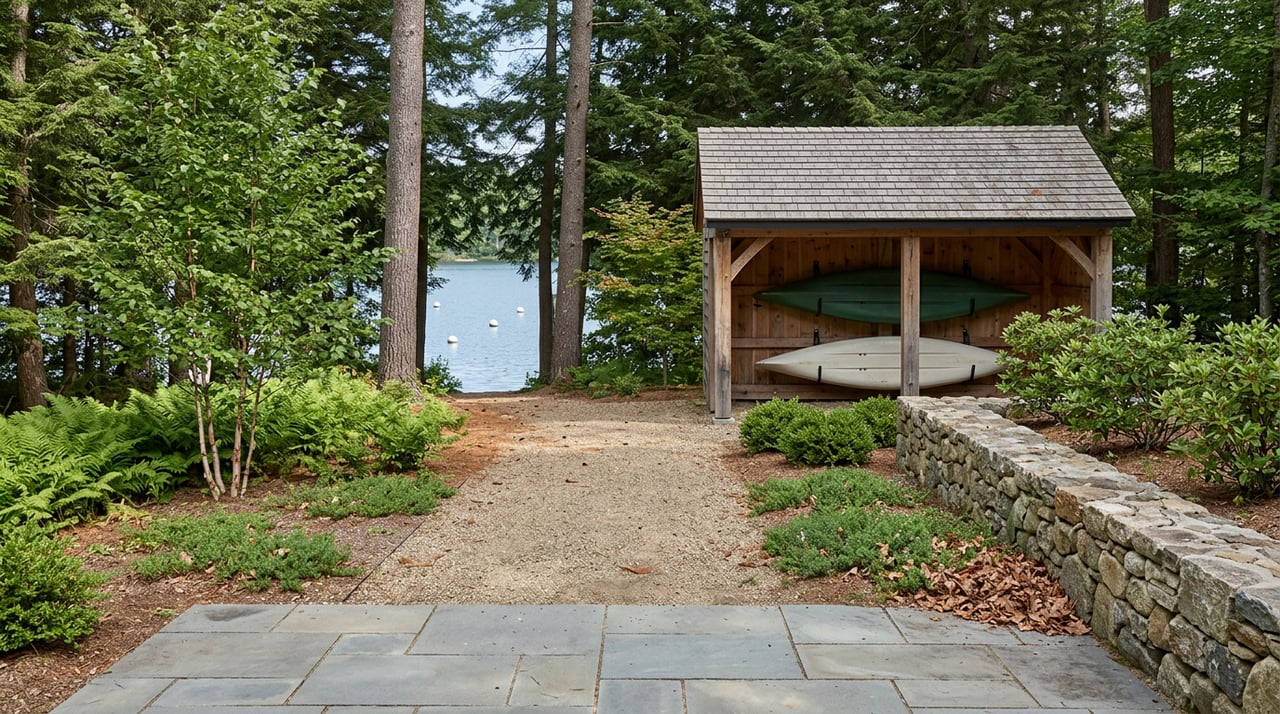
Water-access communities in Gilford can offer a wide mix of features. Common amenities include sandy association beaches, swim areas, day docks, kayak and paddleboard racks, congregate mooring fields, deeded or assigned slips, bathhouses, and on-site parking. Some private facilities may offer winter storage, gas docks, or service yards. Access rules vary by community type, so confirm guest policies, timing limits for day docks, and trailer or parking rules.
Key takeaway: Ask whether a slip or mooring is deeded, leased, assigned by the association, or tied to a waitlist. That single detail can change both your cost and your boating plans.
Moorings vs. slips
Moorings are state-permitted and carry decal and placement rules under RSA 270. By contrast, slips may be deeded real property within a condo or sold/leased through a private marina. Always confirm whether a slip transfers with the property or is a separate asset with its own fees and rules.
Fees and long-term costs
You will typically see these cost categories:
- Annual assessments or dues: Fund routine maintenance such as landscaping, trash, snow, utilities for common areas, lifeguards or staff, and reserves. Slip communities may also charge separate marina dues, as seen at facilities like Mountain View Yacht Club.
- Mooring and decal charges: State decals have initial and renewal fees set in the mooring administrative rules. Associations that run congregate mooring fields may add user fees, subject to statutory limits.
- Special assessments: One-time charges for capital work such as dock replacement, shoreline stabilization, or dredging. Under RSA 356-B, unpaid condo assessments can become a lien, so verify balances at resale.
- Illustrative ranges: Local reporting has noted very low annual trust fees in some neighborhoods and higher marina or slip fees elsewhere. For example, the Gunstock Acres article mentions a modest annual lot fee historically, but treat any numbers as illustrative and confirm with the current managing entity.
Maintenance drives long-run costs. Associations budget for beach grooming, dock repairs, erosion control, and compliance work like winter removal and spring installation of docks if required by permit. Dredging is complex and costly, often needing technical studies and multiple approvals; the Town’s recent Gilford’s town dock and ramp RFP shows how involved such projects can be. Condominium communities also carry master insurance as outlined in RSA 356-B; ask how deductibles and coverage affect owners.
Buyer due-diligence checklist
Request these items and verify with the Town and State where needed:
- Governing documents: Declaration, bylaws, rules, easements, and amendments. For condos, confirm required disclosures under RSA 356-B.
- Financials: Current budget, year-to-date statements, reserve balance, and any reserve study or plan. Compare to industry reserve guidance.
- Meeting minutes: Review 12 to 24 months of owner and board minutes for large projects, litigation, or planned assessments.
- Resale or estoppel statement: For condos, obtain the recordable statement of unpaid assessments and any resale package under RSA 356-B.
- Insurance: Master policy summary and any owner-required coverages. Confirm deductibles and how losses are handled.
- Docks and moorings: All NHDES and town permits, mooring permit numbers and current decals, and rules for any congregate field. Verify status under RSA 270 and with Marine Patrol.
- Waterfront projects: Any engineering reports, shoreline stabilization plans, dredging proposals, or funding commitments. Cross-check town postings and permits.
- Rentals and use rules: Short-term rental policies and any Town ordinances. Start with the latest Gilford ordinances and facility rules.
Questions to ask during your review:
- Are slips or moorings deeded, leased, or association privileges, and how do they transfer at sale? Are there waitlists and how are they managed?
- Have there been special assessments in the past 3 to 5 years? Are any projected, and for what purpose?
- What are the rules on guest passes, parking, boat trailers, and short-term rentals? How are they enforced?
How we help you compare options
Water-access in Gilford is full of nuance, from mooring decals to shoreline permits and HOA budgets. You deserve a clear, side-by-side view of what each property actually delivers. Our team specializes in waterfront and lake-access purchases across the Lakes Region, and we help you align amenities, rules, and long-run costs with your boating and lifestyle goals.
Ready to pinpoint the right community and avoid surprises at closing? Start your lake property search with Lake Mountain Property Group.
FAQs
What is the difference between water access and true waterfront in Gilford?
- Water access typically means shared rights to a beach, dock, mooring field, or marina facility, while true waterfront includes private shoreline that often requires separate NHDES and Town permitting for docks or shoreline work.
How do I get a mooring on Lake Winnipesaukee in Gilford?
- Moorings require a state permit and current decal under RSA 270; verify permit status and any congregate field rules with the Marine Patrol before you buy.
Are boat slips usually deeded in Gilford water-access communities?
- It depends on the community; some slips are deeded within a condo or trust while others are leased or assigned by a marina or HOA, so confirm transfer rules, fees, and waitlists in writing.
What HOA fees should I expect for water-access properties?
- Expect annual dues for maintenance and reserves, possible separate marina or slip fees, state mooring decal charges if applicable, and occasional special assessments for capital projects like dock replacement or dredging.
What permits are needed to replace or modify a dock?
- Most dock work needs NHDES authorization under the Shoreland Water Quality Protection Act plus Town review, so request the property’s permit history and confirm current approvals with both agencies.
Can I short-term rent a home in a Gilford water-access community?
- Many associations regulate rentals and the Town also posts related rules, so review HOA documents and check the latest Gilford ordinances and facility rules before proceeding.